Monday, 5 February 2007

Corbett Tiger Reserve and National Park

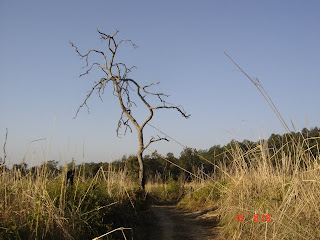
Based at Ramnagar, 250km northeast of Delhi and 63km southwest of Nainital, Corbett Tiger Reserve is one of India's premier wildlife reserves. Established in 1936 by Jim Corbett (among others) as the Hailey National Park, India's first, and later renamed in his honour, it is one of Himalayan India's last expanses of wilderness. Almost the entire 1288-square-kilometre park, spread over the foothills of Kumaon, is sheltered by a buffer zone of mixed deciduous and giant sal forests, which provide impenetrable cover for wildlife. Most of the core area of 520 square kilometres at its heart remains out of bounds, and safaris on foot are only permissible in the fringe forests.

Corbett TigerCorbett is most famous for its big cats, and in particular the tiger - this was the first designated Project Tiger Reserve, in 1973 - but its 143 tigers are extremely elusive. Sightings are very far from guaranteed, and should be regarded as an unlikely bonus. Nonetheless, although there have been problems elsewhere with the project, and the very survival of the tiger in India is in serious jeopardy , Corbett does at least seem to be prioritizing the needs of tigers over those of other wildlife and of tourists. Still, poaching is not unheard of - five tigers were killed in the Himalayan foothills in early 2001, two inside the Corbett boundaries. It's Corbett's elephants, however, that face a more serious threat. Around two dozen are killed each year in and around the park; poisoned by plantation workers or shot by farmers for hide, meat and, most importantly, their valuable tusks. The park's 627 elephants - 100 of them males with tusks - have been confined within its boundaries since the construction of the Ramganga reservoir in 1974 blocked migratory routes that formerly ranged as far as Rajaji National Park, 200km west.Corbett Tigers The best place to see them is around the picturesque Dhikala camp near the reservoir; spring is the best time, when the water level drops and the animals have more space to roam. The reservoir also shelters populations of gharial, a long-snouted, fish-eating crocodile, and maggar, a large marsh crocodile, as well as other reptiles. Jackal are common, and wild boar run through the camps in the evenings. The grasslands around Dhikala are home to deer species such as the spotted chital, hog and barking deer and the larger sambar, while rhesus and common langur, the two main classes of Indian monkeys, are both abundant, and happy to provide in-camp entertainment. Bird life ranges from water birds such as the pied kingfisher to birds of prey, including the crested serpent eagle, Pallas's fishing eagle and Himalayan greyheaded fishing eagle. The closest of the various gates into the park, 1km from central Ramnagar, is Amdanda on the road to Bijrani camp, 11km away, a base for day-trips. Dhangarhi Gate, 18km along the highway north to Ranikhet, provides access to the northern and northwestern portion of the park along the Ramganga river valley, and to the main camp of Dhikala.


Jim Corbett (1875-1955)
Hunter of man-eating tigers, photographer, conservationist and author, Jim Corbett was born in Nainital of English and Irish parentage. Jim Corbett at DhiklaA childhood spent around the Corbett winter home of Kaladhungi (halfway between Nainital and Ramnagar, and now a rather disappointing memorial to him) brought young Jim into close communion with nature and to an instinctive understanding of jungle ways. After working on the railways, he joined the Indian army in 1917 at the age of 40, rising to the rank of Lieutenant Colonel, and seeing action in Flanders at the head of the 70th Kumaon Company. Known locally as "Carpet Sahib", a mispronunciation of his name, Jim Corbett was called upon time and time again to rid the hills of Kumaon of man-eating tigers and leopards. Normally shy of human contact, such animals become man-eaters when infirmity brought upon by old age or wounds renders them unable to hunt their usual prey. Many of those killed by Corbett were found to have suppurating wounds caused by porcupine quills embedded deep in their paws; tigers always seem to fall for the porcupine's simple defensive trick of walking backwards in line with its lethal quills.

Jim Corbett with LeopardOne of Corbett's most memorable exploits was the killing of the Champawat tiger, which was responsible for a documented 436 human deaths, and was bold enough to steal its victims from the midst of human habitation; he also terminated the careers of the Chowgarh tigress, the Talla Des and the Mohan man-eaters. By the mid-1930s, though, Corbett had become dismayed with the increasing number of hunters in the Himalayas and the resultant decline in wildlife, and diverted his energies into conservation, swapping his gun for a movie camera and spending months capturing tigers on film. His adventures are described in books such as My India, Jungle Lore and Man-Eaters of Kumaon; Martin Booth's Carpet Sahib is an excellent biography of a remarkable man. Awarded the Order of the British Empire in recognition of his lifelong work with nature, Jim Corbett was unhappy in post-Independence India, and left to retire in East Africa. He continued his conservation efforts until his death at the age of eighty.

Dhikala
Beautifully situated overlooking the Ramganga reservoir and the forested hills beyond, Corbett's main camp, DHIKALA, lies 49km northwest of Ramnagar. As you can only stray beyond the confines of the camp on elephant-back or in a car or Jeep, the whole place has something of the air of a military encampment. Accommodation, all bookable via the Corbett Tiger Reserve reception in Ramnagar, ranges from the 24 bunk beds in the Log Huts (Rs200) to more comfortable bungalows and cabins (Rs1000–3000) which sleep two. Indian and Western food is available in the KMVN-run Parvat restaurant, which also has a reading room and outdoor area where you can watch film shows on wildlife (in Hindi). The same quality food is served at cheaper prices and minus the 8 percent sales tax at a dhaba at the other end of the camp, which is frequented by the park staff and drivers. Entry fees into the park, payable at the Ramnagar reception centre, are higher here than at Ramnagar. It's normally possible to see plenty of animals and birds from the Dhikala watchtower, which is a 1km wander down the path near the restaurant (turn left at the crossroads of tracks); bring binoculars, remain quiet, and don't wear bright colours or perfume. Chital, sambar, and various other deer species find refuge in the savannah grasslands known as the chaur, behind the camp to the south, and tigers are occasionally drawn in looking for prey. Two-hour elephant rides (Rs250 per person; first-come-first-served) explore this sea of grass, rarely penetrating far into the deep jungles beyond; try to convince your mahout (elephant driver) to venture in, as they can be quite magical. On the way to Dhikala from the Dhangarhi gate, the road passes through magnificent forest - if you have your own transport, stop at the High Bank vantage point, and try to spot crocodile or even elephant on the river below. If it's late, you can stop for a night halt en route at the Sultan (Rs700-1000), Gairal (Rs1000-1500) and Sarapduli (Rs1000-1500) forest rest houses, bookable through the Reserve reception centre. The bungalows are surrounded by deep forest; as movement on foot is prohibited, you'll only see wild animals that stray close to or into the compound.


Ramnagar
Situated in the rich farm-belt of the terai, on the southeastern fringes of the great forests, the busy market town of RAMNAGAR is the administrative hub for Corbett Tiger Reserve.Corbett National Park Permits and accommodation reservations are issued at the reception centre, about 200m north of the bus stand towards Nainital (see box "Moving on from Nainital"). There's little to do around Ramnagar itself except go fishing (Oct 1-June 30). At Lohachaur, 15km north along the River Kosi, good anglers are in with a chance of landing the legendary mahseer, a redoubtable battling river carp. Fishing permits must be sought from the Corbett Tiger Reserve reception centre; most resorts also arrange all-inclusive fishing trips. Ramnagar is served by frequent buses to and from Nainital and Ranikhet, 112km north. Buses arrive every half-hour or so after the eight-hour trip from Delhi; Delhi Transport Corporation run a semi-deluxe service (Rs120), and most of the alternatives are pretty basic. Although most tourists head straight to Dhikala in the park as soon as they arrive, Ramnagar does have some accommodation. The KMVN Tourist Lodge (Rs300–1000), next to the Corbett Tiger Reserve reception, is as institutional as usual, with a dorm (Rs60) as well as spartan doubles. A further 200m south on the main road, down the lane opposite Govind restaurant, the basic Everest (Rs150-300) has sunny balconies, but no running hot water in the attached bathrooms; a little further still is the cheaper, less salubrious Rameshwaram (Below Rs500), whose only advantage is that it's the quietest. On the main road, Govind is a good multi-cuisine restaurant, strongest on Indian food. There is no official currency exchange, though Anuradha confectionary store, 400m south of Govind, will change sterling, euros and dollars if you're really stuck. Moving on from Ramnagar, there are six daily government buses to Haridwar, three to Nainital and ten to Delhi. The only direct train to Delhi leaves at 9.10pm and arrives at 6.30am, with interminable stops along the way. For faster trains and connections to other parts change at Moradabad. The nearest airport, at Pantnagar, 80km southeast, is rarely used.

Organizing entry into Corbett Tiger Reserve
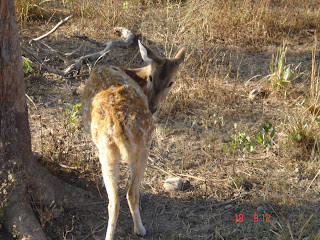
All visitors to Corbett Tiger Reserve have to obtain permits from the Ramnagar reception centre (daily 8am-noon & 1.30-4.30pm; &05947/251489),Corbett Deer and are advised to book accommodation at least 30 days in advance (20 days for Indian nationals). If you've turned up on the off-chance of getting accommodation, poor communication between the tourist zones in the reserve, the Delhi booking office and the HQ means you may be told that rooms (and dorms) are fully booked, when they are in fact empty. No accommodation means no visiting permit, so booking thirty days ahead saves a lot of hassle. To get a permit, you have to pay at the reception centre for your entry fee, the vehicle and driver entry fees, and your accommodation. A tariff sheet spells out the various costs; foreigners pay up to nine times as much as Indian nationals.
Jeeps, the most convenient way to travel to and around the reserve, can only be rented at Ramnagar. Reckon on Rs1200 per day from the KMVN Tourist Lodge, or from Girish at Govind restaurant. Although not as reliable, private Jeeps, readily available outside the bus stand, are better value, costing from around Rs1000 for 24hr. As none of the traffic into the park is regulated, shop around and be clear about what you're getting for your money (fuel, a 3hr safari and driver camping fee should all be included). A Petrol 4WD, such as a Maruti Gypsy, is best as it is quiet (if the brakes are well maintained) and built for the terrain. All jeep safaris must be accompanied by a guide (another Rs125) - who may or may not be able to identify wildlife and speak English, and is allotted to your jeep by a rota system. If you require a guide with specific knowledge (eg for birding), write or fax the Field Director one month in advance with your request (Corbett Tiger Reserve, Ramnagar 244715, Nainital, Uttaranchal).

Note: that Corbett is only open between 15 November and 15 June. Between June and November the monsoons flood the riverbanks, and cut the fragile road links.

A number of self-contained hotels and resorts are springing up on the fringes of Corbett, providing a higher standard of accommodation than in Dhikala or Ramnagar - at a price - as well as guides for expeditions in the neighbouring forests, which can be as rich in wildlife as the park, without the restrictions.

Corbett now has a good range of places to stay and eat. Some of the best and inexpensive places of accomodation are :-
If you are planning to visit Corbett Tiger Reserve you can refer the Corbett Accomodation Guide

Corbett Tiger Reserve is India’s first and one of her finest Tiger Reserves. It supports a strong historical background, which can be traced from the early 1800 when it's forests were private property of the rulers of the princely state of Tehri Garhwal.

This is one of my favourite camp outs in India, Try your luck to see those big wild cats out there... !

Friday, 2 February 2007

Tikse Gompa, Leh, Ladakh

Leh LadakhLADAKH, the far-flung eastern corner of troubled Jammu and Kashmir state, is India's most remote and sparsely populated region, a high-altitude snow desert cradled by the Karakoram and Great Himalayas ranges, and criss-crossed by a myriad razor-sharp peaks and ridges. The highest concentration of monasteries is in the Indus Valley near Leh, the region's capital. Surrounded by sublime landscapes and crammed with hotels, guesthouses, and restaurants, this atmospheric little town, a staging post on the old Silk Route, is most visitors' point of arrival and an ideal base for side trips. Leh only became regional capital in the seventeenth century, when Sengge Namgyal shifted his court here from Shey, 15km southeast, to be closer to the head of the Khardung La-Karakoram corridor into China. The move paid off: within a generation the town had blossomed into one of the busiest markets on the Silk Road.

Ladakh's most photographed and architecturally impressive gompa is at TIKSE, 19km southeast of Leh. Founded in the fifteenth century, its whitewashed chortens and cubic monks' quarters rise in ranks up the sides of a craggy bluff, crowned by an imposing ochre- and red-painted temple complex whose gleaming golden finials are visible for miles in every direction.

Tikse BuddhaTikse's reincarnation as a major tourist attraction has brought it mixed blessings: its constant stream of summer visitors spoils the peace and quiet necessary for meditation, but the income generated has enabled the monks to invest in major refurbishments, among them the Maitreya temple immediately above the main courtyard. Inaugurated in 1980 by the Dalai Lama, the shrine is built around a gigantic fourteen-metre gold-faced Buddha-to-come, seated not on a throne as is normally the case, but in the lotus position. The bright murals on the wall behind, painted by monks from Lingshet gompa in Zanskar, depict scenes from Maitreya's life. For most foreign visitors, however, the highlight of a trip to Tikse is the view from its lofty roof terrace. A patchwork of barley fields stretches across the floor of the valley, fringed by rippling snow-flecked desert mountains and a string of monasteries, palaces, and Ladakhi villages. To enjoy this impressive panorama accompanied by primeval groans from the gompa's gargantuan Tibetan trumpets - played on the rooftop at the 7am puja - you'll have to stay overnight or arrange an early Jeep from Leh.

Tikse GompaA metalled road cuts up the empty west side of the hill from the main highway to the monastery's small car park. If you arrive by minibus from Leh (hourly, from the town bus stand), pick your way across the wasteground below the gompa and follow the footpath up through its lower buildings to the main entrance, where monks issue tickets (Rs20). The last bus back to Leh leaves at 6pm. The village's Chamba Hotel (April-Sept; Rs150–500), run by the monastery,offers accommodation and flexible rates, with a good garden restaurant serving a varied menu from Tibetan food to pancakes.

Leh now has a good range of places to stay and eat. Some of the best and inexpensive places of accomodation are :-


If you are planning to visit TIKSE you can refer the LEH Accomodation Guide

Its a quite relishing place to discover the beauty of the barren paradise.....

Thursday, 1 February 2007

Kaziranga National Park, Assam

Kaziranga National Park SafariA World Heritage Site covering an area of 430 square kilometres on the southern bank of the Brahmaputra, the magnificent KAZIRANGA NATIONAL PARK, 217km east of Guwahati, occupies the vast valley floor against a backdrop of the Karbi Anglong hills. Its rivulets, shallow lakes and the semi-evergreen forested highlands blend into marshes and flood plains covered with tall elephant grass. A visit here, especially in the early morning, is an exhilarating experience and you will likely see elephants, deer, wild buffalo and the park's famous one-horned rhino - numbering around 1500, the largest concentration in the subcontinent. Though its estimated eighty tigers are very elusive, driving through the park's landscape of open savannah grassland interspersed with dense jungle is a wonderful experience. The abundant birdlife includes egrets, herons, storks, fish eagles, kingfishers and a grey pelican colony.

Kaziranga One Horned RhinoKaziranga celebrated its centenary in 2005. Sadly, with grasslands bordering onto cultivated fields, and domestic cattle encroaching on the sanctuary and introducing epidemics, the wild animals are under increasing threat. The authorities say that poaching is now under control, though rhino horns still fetch astronomical prices as aphrodisiacs. The rhino is best seen from the back of an elephant, first thing on a winter's morning. They seem oblivious to camera-clicking tourists, although like the unpredictable wild buffalo, they're equipped with lethal horns and are potentially ferocious. Jeeps will take you deeper into the forest than elephants but they cannot get nearly as close to the rhinos.

Kaziranga is open from November to early April. Try to avoid visiting the park on Sundays, when it gets busy with noisy groups of Indian tourists. During the monsoons (June-Sept), the Brahmaputra bursts its banks, flooding the low-lying grasslands and causing animals to move to higher ground within the park.

Kaziranga National Park - ElephantKaziranga is easily accessible by bus, with services from Tezpur (80km), Jorhat (97km), Guwahati (220km) and Dibrugarh (220km) in Assam, Itanagar in Arunachal Pradesh and Kohima in Nagaland. ASTC and private buses from all directions stop at Kohora, the main gate, on the NH-37 (AT Road), with Network Travels serving as the pick-up and drop-off point - you can arrange transport to and from the park here, and there's an inexpensive restaurant. The nearest town is BOKAKHAT, 20km east, which is good for shopping and has Internet facilities.

For information on the park, visit the Directorate of Tourism (Telephone03776/262423) in Bonani Lodge, or contact the Field Director (Telephone03776/268095). Visiting Kaziranga is expensive because of the two-tier price system, with different entry costs for Indian nationals (Rs20) and foreigners (Rs250), plus camera fees (Rs 500 still, Rs10,000 video [Rs250/Rs 2500]). Both Jeeps (Rs500 plus Rs150 tax, Rs50 compulsory guard fees and Rs20 "viewing" fees) and one-hour elephant rides (5.15am, 6.15am & 7.15am; Rs750 plus Rs250 viewing fee [Rs120 plus Rs20]) can be booked in advance via hotels or the park offices in Kohora, as can guides. All vehicles also have to pay an extra toll of Rs300. Elephant rides take place in both the Kohora and Baguri ranges of the park.

Kaziranga now has a good range of places to stay and eat. Some of the best and inexpensive places of accomodation are :-

If you are planning to visit Kaziranga National Park you can refer the Kaziranga Accomodation Guide

Its a paradise for wildlife lovers !

Wednesday, 31 January 2007

Meherangarh Fort, Jodhpur

Described by Kipling as the work of angels and giants, Jodhpur's Meherangarh Fort, provides what must be the most authentic surviving taste of the ceaseless round of war, honour and extravagance that characterized Rajputana. It wasn't always so stunning, however. For decades it was locked up, caked in bat droppings, until in 1972, the current, Oxford-educated maharaja - who was born a midnight child in the year of India's Independence and took office at the age of four - created a foundation to rescue the derelict edifice. Unlike the fort in Jaisalmer it is uninhabited, its paths trodden only by visitors to the temples and palaces within its high crenellated walls.
Meherangarh Fort JodhpurOn the wall next to Loha Pole, the sixth of seven gates designed to hinder the ascent of charging enemy elephants up a steep winding cobbled road, you can see the handprints of Maharaja Man Singh's widows. Following the Rajput code of honour, they voluntarily ended their lives in 1843 on their husband's pyre, in defiance of the law against sati passed in 1829 by the British. Beyond the massive Suraj Pole, the final gate, lie the palaces that now serve as the superb Meherangarh Museum. From the courtyards, you can see the fantastic jali (lattice) work that almost entirely covers their sandstone walls and balconies, as well as a portrait of Rao Jodha himself. Solid silver howdahs (elephant seats) and palanquins are on display, as well as daggers and photos of the maharajas' coronations. One prize exhibit is a 250-year-old pure silk tent seized during a raid on the Moghul court in Delhi. In the Jhanki Mahal, or "Queen's Palace", there's a colourful array of cradles of former rulers, while Moti Mahal ("Pearl Palace") holds the nine cushions reserved for the nine heads of the Jodhpurian state (and one central cushion for the maharaja).
Meherangarh Fort WindowOutside, in Shangar Chowk ("King's Coronation Courtyard"), is the majestic marble coronation seat upon which all the rulers apart from Jodha have been, and still are, crowned. Nearby, the royal astrologer provides consultations for a Rs150-300 fee. The most elaborate of the apartments is Phool Mahal ("Flower Palace"), a dancing hall for the entertainment of the maharaja and his guests. Pictures of dancers, deities and rulers look out from its walls and wooden ceilings.


Meherangarh Fort CannonThe walk up to the fort from the old city passes through busy bazaars, with some streets so narrow that pedestrians must advance in single file. You can also get there by taxi or rickshaw along the much longer road (5km) that enters the old city at Nagauri Gate. The outstanding self-guided audio tour takes a couple of hours to complete, and finishes with a stroll out to the Durga temple, perched on the far southern tip of the precipice. The fort's café restaurant gets busy during the day and is only really worth a refresher. But be sure to leave time to explore the first rate gift shop, which sells expensive, high-quality crafts, vintage jewellery and even Jodhpur riding britches, which were the height of fashion in Europe when brought over in 1887 by a royal emissary.


Visiting Details

Daily:
  • summer 8.30am-5.30pm
  • winter 9am-5pm


Entry:

  • Rs250 entry includes audio tour if you leave ID as deposit
  • Plus Rs50 for camera
  • Rs200 video
  • Elevator Rs 15
For more info visit www.maharajajodhpur.com

For Jodhpur Hotel and Accomodation Guide Visit Jodhpur Hotel Guide

This fort is worth visiting. It will give you a life time experience.

The Ajanta and Ellora Caves


Ajanta Caves
Ajanta (more properly Ajujnthi), a village in the erstwhile dominions of the Nizam of Hyderabad in India and now in Buldhana district in the state of Maharashtra
(N. lat. 20 deg. 32' by E. long. 75 deg. 48') is celebrated for its cave hermitages and halls.
Located 99-km from Aurangabad, Maharashtra, Ajanta encompasses 29 rock-cut rooms created between 200 BC and AD 650 using rudimentary hand tools. Most are viharas (living quarters), while four are chaityas (temples).

The Ajanta caves were discovered in the 19th century by a group of British officers on a tiger hunt.

Ajanta began as a religious enclave for Buddhist monks and scholars more than 2,000 years ago. It is believed that, originally, itinerant monks sought shelter in natural grottos during monsoons and began decorating them with religious motifs to help pass the rainy season. They used earlier wooden structures as models for their work. As the grottos were developed and expanded, they became permanent monasteries, housing perhaps 200 residents.

The artisans responsible for Ajanta did not just hack holes in the cliff, though. They carefully excavated, carving stairs, benches, screens, columns, sculptures, and other furnishings and decorations as they went, so that these elements remained attached to the resulting floors, ceilings and walls.

They also painted patterns and pictures, employing pigments derived from natural, water soluble substances. Their achievements would seem incredible if executed under ideal circumstances, yet they worked only by the light of oil lamps and what little sunshine penetrated cave entrances.

The seventh century abandonment of these masterpieces is a mystery. Perhaps the Buddhists suffered religious persecution. Or perhaps the isolation of the caves made it difficult for the monks to collect sufficient alms for survival.

Some sources suggest that remnants of the Ajanta colony relocated to Ellora, a site closer to an important caravan route. There, another series of handcrafted caves chronologically begins where the Ajanta caves end.

Ellora Caves
Near Ellora , village in E central Maharashtra state, India, extending more than 1.6 km on a hill, are 34 rock and cave temples (5th–13th century).

Located about 30 Kilometres from Aurangabad, Ellora caves are known for the genius of their sculptors. It is generally believed that these caves were constructed by the sculptors who moved on from Ajanta. This cave complex is multicultural, as the caves here provide a mix of Buddhist, Hindu and Jain religions. The Buddhist caves came first, about 200 BC - 600 AD followed by the Hindu 500 - 900 AD and Jain 800 - 1000 AD.
Of the 34 caves chiselled into the sloping side of the low hill at Ellora, 12 (dating from AD 600 to 800) are Buddhist (one chaitya, the rest viharas), 17 are Hindu (AD 600 to 900), and 5 are Jain (AD 800 to 1100).

As the dates indicate, some caves were fashioned simultaneously - maybe as a form of religious competition. At the time, Buddhism was declining in India and Hinduism regaining ground, so representatives of both were eager to impress potential followers.

Although Ellora has more caves than Ajanta, the rooms generally are smaller and simpler (with exception of Kailasa Temple).

Visiting Ajanta and Ellora

One of India's greatest architectural treasures, the Kailasa temple attracts thousands of tourists annually.

Visiting Details
Today, both Ajanta and Ellora are maintained by the Maharashtra Tourism Development Corporation. The sites are open daily from 9 a.m. until 5:30 p.m., with guides available for hire. Visitors pay a small admission fee to enter the Ajanta site and extra to attendants for lighting cave details. Entry is free to all caves at Ellora except the Kailasa Temple.

A good base from which to visit Ajanta and Ellora is Aurangabad, serviced daily by Indian Airlines and East West Airlines flights from Mumbai (Bombay). The city has a variety of accommodations, ranging from a youth hostel to five-star hotels.

At least a three-night stay in Aurangabad is advised, because Ajanta
(100 kilometres northeast by road) requires a full-day excursion and Ellora
(30 kilometres northwest) a half-day.

Wait for more exiting travel guides....

Tuesday, 30 January 2007

Ajanta, Ellora and Kailasa Temple

I have been traveling around whole my life, since I was 1 yr old. So I decided to contribute some of my favourite destinations. Ajanta Ellora is one of my favourite destinations in India.

Ajanta and nearby Ellora are two of the most amazing archaeological sites in India. Although handcrafted caves are scattered throughout India's western state of Maharashtra, the complexes at Ajanta and Ellora - roughly 300 kilometres northeast of Mumbai (Bombay) - are the most elaborate and varied examples known. The caves aren't natural caves, but man-made temples cut into a massive granite hillside. They were built by generations of Buddhist, Hindu, and Jain monks, who lived, worked, and worshipped in the caves, slowly carving out elaborate statues, pillars, and meditation rooms.

Kailasa Temple

Although all of the caves at Ellora are stunning architectural feats, the Hindu Kailasa Temple is the jewel in the crown. Carved to represent Mt. Kailasa,
the home of the god Shiva in the Himalayas, it is the largest monolithic structure in the world, carved top-down from a single rock. It contains the largest cantilevered rock ceiling in the world. The scale at which the work was undertaken is enormous. It covers twice the area of the Parthenon in Athens and is 1.5 times high, and it entailed removing 200,000 tonnes of rock. It is believed to have taken 7,000 labourers 150 years to complete the project.

Kailasa Temple, Ajanta and Ellora CavesThe rear wall of its excavated courtyard 276 feet (84 m) 154 feet (47 m) is 100 ft (33 m) high. The temple proper is 164 feet (50 m) deep, 109 feet (33 m) wide, and 98 feet (30 m) high. It consists of a gateway, antechamber, assembly hall, sanctuary and tower. Virtually every surface is lavishly embellished with symbols and figures from the puranas (sacred Sanskrit poems). The temple is connected to the gallery wall by a bridge. The Kailasa temple is an illustration of one of those rare occasions when men's minds, hearts, and hands work in unison towards the consummation of a supreme ideal.
Its awesome…
I will describe more in my next post.
Wait for the next post……

Monday, 15 January 2007

Touched by Magic of India

India – the name itself has been endowed with an exceptional kind of charisma. The proud country has undoubtedly covered a long distance from being known as “developing country” to showing the world its real potential. Today, this land of all seasons is enjoying great power status. Taking a trip back in history, India has accomplished everything from encountering the royal Asiatic lions in Gir forests to experiencing the magical waters off Lakshwadeep.

India impresses because of its own style and individuality. This encourages millions of people to pack their bags and book their air tickets to visit this land of all seasons thereby making it a haven of tourist delights. Unique richness seen and found in diversity of the India has magnetism to attract people. Etiquettes, way of communicating and offering the guests a status of God stand for the chief features of Indian culture. It has its own values and beliefs that remain unchanged despite of adopting the modern means and bringing about a great improvement in the lifestyle.

Do you wish to see the place where earth meets sky or where cosmic energy of the Supreme Being prevails??? If your answer to all these questions is “yes”, then India is a place to fly to. From the natural mangroves of Sunderbans to the scorching heat of Thar Desert, from the roaring heights of large mountains to calming blue water of the Andaman, from metropolitan cities like Delhi and Bangalore to louche living of Goa and Kerela, India has all.

Known as melting pot of religion, India has also been regarded because of its being equipped with distinguished aesthetic and functional value. Each region in India has its own store of art handed down from generation to generation. Not including the rich scriptural tradition when talking about Indian culture will be highly unfair.

Undeniably, the India is a country that offers wealth of sight, cultural passion, and above all diversity of terrain. Here, you see and meet people living with variety and get a chance to walk into lurid luxury. It is a country that promises the tourists to brighten up their eyes with the glory of its culture and spellbound by the exotic beauty of its regions.

India is a place to visit for those who truly want to learn the art of multiplying the joys and happiness. Checking out the marvels of the country that stand for major attraction has its own fun. Talking about religious capital of India - Varanasi, this charming and easy going city is sure to surprise you by its extraordinary faith in the Almighty together with the combination of all its virtues.

Impressed by all the details, if you are planning to visit the great country, then September to March are considered to be the ideal seasons to familiarize yourself with features of the country. Needless to say, India has certainly inspired several places’ fair share of travel tradition. And, that’s perhaps what it is - the magic of India, motivating millions of people from both near and far away lands to capture sweet memories of traveling here.